AI in Education: How Automation Is Changing Teaching Jobs
Why AI will transform how we teach but won’t replace the teachers who connect, inspire, and adapt.

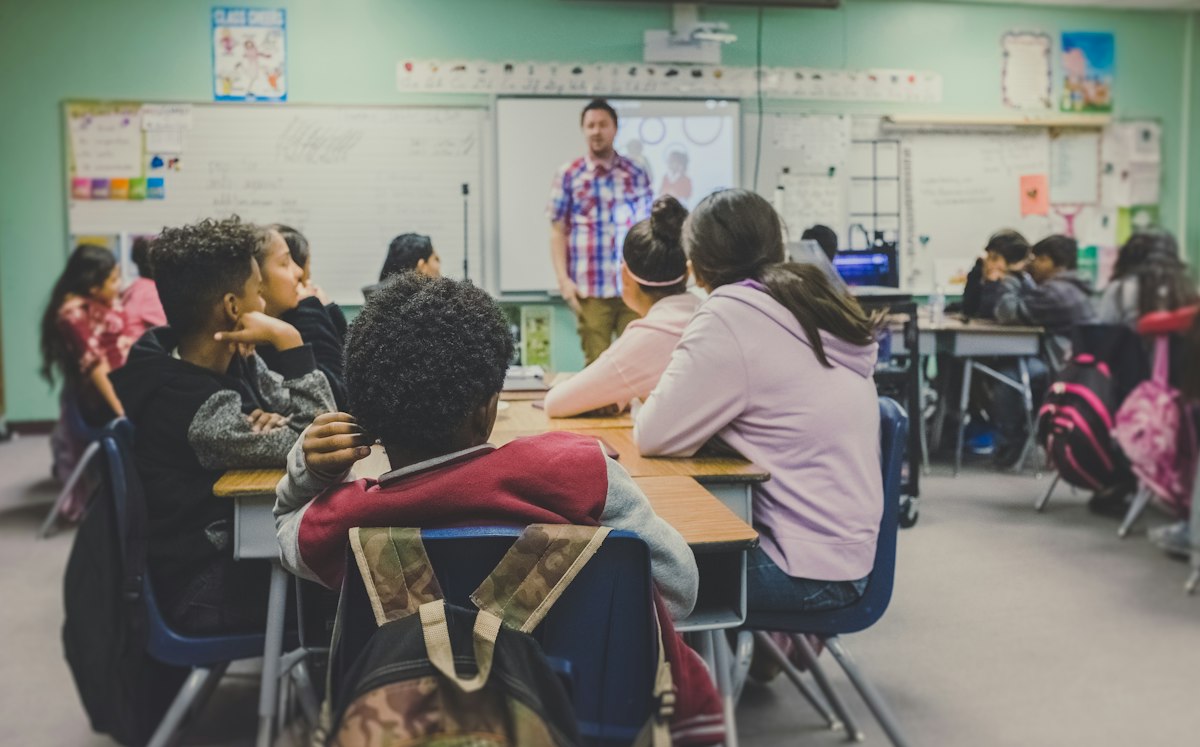
Education is in the middle of an AI revolution, but it’s a different kind of revolution than what we’re seeing in finance or manufacturing. While AI tools like ChatGPT, Khan Academy’s Khanmigo, and Duolingo Max are transforming how students learn, the Bureau of Labor Statistics still projects 4–8% growth in teaching jobs through 2032.
The reason? Teaching is fundamentally a relationship-driven profession. AI can deliver content, grade assignments, and personalize learning paths, but it cannot inspire a struggling student, manage classroom dynamics, or provide the emotional support that defines great education.
Teaching task automation potential
Source: OECD TALIS, BLS
Tasks being automated right now
Grading and assessment is the fastest-moving automation area. AI can now grade essays with reasonable accuracy, provide instant feedback on math problems, and generate personalized quizzes. Administrative tasks (attendance tracking, report generation, parent communication templates) are also rapidly automating.
Content creation and curriculum design tools like Google’s NotebookLM and various AI lesson planners can generate lesson outlines, reading lists, and learning activities in seconds. This shifts the teacher’s role from content creator to content curator and learning experience designer.

Why teachers remain irreplaceable
The OECD’s Teaching and Learning International Survey found that the most impactful teaching practices (mentoring, social-emotional support, and adaptive instruction) are precisely the ones AI struggles with. Students learn best from teachers who know them, care about them, and can adjust their approach in real time.
Primary and secondary education are especially protected. Young learners need human role models, physical presence, and the kind of relational safety that no AI can provide. Higher education faces more disruption, particularly in lecture-heavy courses that could be replaced by high-quality AI-delivered content.
Key Takeaways
- The most impactful teaching practices (mentoring, social-emotional support) are precisely what AI cannot do
- Primary and secondary education are especially protected due to need for human role models
- AI literacy is becoming essential for educators to integrate tools into pedagogy
- Education administrators face higher risk than teachers: focus on judgment over process execution
The skills teachers need to develop
AI literacy is becoming essential for educators. Teachers who understand how to integrate AI tools into their pedagogy (using AI for differentiated instruction, real-time assessment, and personalized learning paths) will be significantly more effective and more valued.
The World Economic Forum identifies learning experience design, data-driven pedagogy, and social-emotional competence as the top growth skills for education professionals through 2030.
Education administration: a different story
While teaching roles remain secure, education administration faces higher automation risk. Admissions processing, financial aid calculations, scheduling optimization, and enrollment management are all tasks where AI excels. Universities and school districts are already reducing administrative headcount through AI adoption.
For education administrators, the strategy is the same as in other sectors: move toward roles that require judgment, strategy, and stakeholder relationships rather than process execution.
Sources & references
Analyze your education role
See how AI impacts your specific teaching or education administration position.